Can't see the menu?
Try the text links at the bottom.
Energy Resources:
Biomass
Biomass:
Energy from organic materials

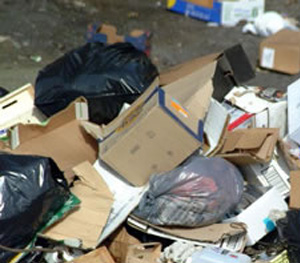
Wood was once our main fuel. We burned it to heat our homes and cook our food. Wood still provides a small percentage of the energy we use, but its importance as an energy source is dwindling. Sugar cane is grown in some areas, and can be fermented to make alcohol, which can be burned to generate power. Alternatively, the cane can be crushed and the pulp (called "bagasse") can be burned, to make steam to drive turbines. Other solid wastes, can be burned to provide heat, or used to make steam for a power station. "Bioconversion" uses plant and animal wastes to produce "biofuels" such as methanol, natural gas, and oil. We can use rubbish, animal manure, woodchips, seaweed, corn stalks and other wastes. |
 |
Video clip: Why use biomass? |
For a biomass power station making electricity, it's pretty much like a fossil fuel power station:

For other biofuels, we may burn it to get the heat for our home, or burn it to get energy for a car engine, or for some other purpose.
|
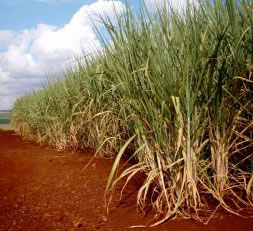
Sugar cane is harvested and taken to a mill, where it is crushed to extract the juice. The juice is used to make sugar, whilst the left-over pulp, called "bagasse" can be burned in a power station. The station usually provides power for the sugar mill, as well as selling electricity to the surrounding area.
|
||
 |
See also:
|
|
 Advantages Advantages
|
|
| Is it renewable? Biomass is renewable, as we're going to carry on making waste products anyway. We can always plant & grow more sugar cane and more trees, so those are renewable too. |
 |
 |
Home Fossil Fuels Nuclear Power Solar Power Wind Power Tidal Power Hydroelectric Power Pumped Storage Wave Power Geothermal Power
Biomass Biogas Other Biofuels See also "Stuff to do" on the home page.
This site uses images from www.freefoto.com and www.sxc.hu I am not responsible for the content of external sites linked from this page.