|
How
the
waves fit
into the
spectrum
Radio
waves
Microwaves
Infra-red
Visible
light
Ultra-
violet
X-rays
Gamma
rays
Quick Quiz
|
|
 
Infra-red waves
are just below visible red light in the electromagnetic spectrum
("Infra" means "below"). You probably think
of Infra-red waves as heat, because they're given off by hot
objects, and you can feel them as warmth on your skin.
Infra-Red waves are also given off by stars,
lamps, flames and anything else that's warm
- including you.
|
|
|


|
Infra-red waves
are called "IR" for short.
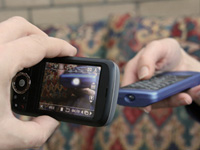
They are used for many tasks, for example, remote
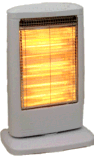
controls for TVs and video recorders, and physiotherapists
use heat lamps to help heal sports injuries.
Because every
object gives off IR waves, we can use them to "see in the dark". Night sights for weapons sometimes
use a sensitive IR detector.
Remember the film, "Predator"? |
|
|
Apart from remote
controls, one of the most common modern uses for IR is in the field
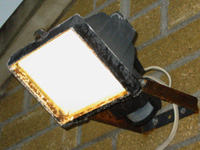
of security. "Passive Infra-Red"
(PIR) detectors are used in burglar alarm
systems, and to control the security lighting that many
people have fitted outside their houses. These detect the Infra-Red
emitted by people and animals.
|
|
You've probably
seen TV programmes in which police helicopters
track criminals at night, using cameras which can see in the dark.
These cameras use Infra-Red waves instead of "ordinary"
light, which is why people look bright in these pictures. Similar
cameras are also used by fire crews and other rescue
workers, to find people trapped in rubble.
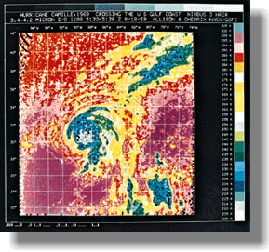
Weather
forecasters use satellite pictures to see what's heading
our way. Some of the images they use are taken using IR cameras,
because they show cloud and rain patterns more clearly. |

|
|
The danger from
too much Infra-Red radiation is very simple - overheating.
|
|